IDAHO FALLS, IDAHO-EV SPECIALISTS
Your Tesla is In good hands
Tesla Car Care
Idaho Falls' Go-To Tesla Detail Shop
Tesla ownership comes with a different set of expectations. We meet them.
Your tesla deserves the best
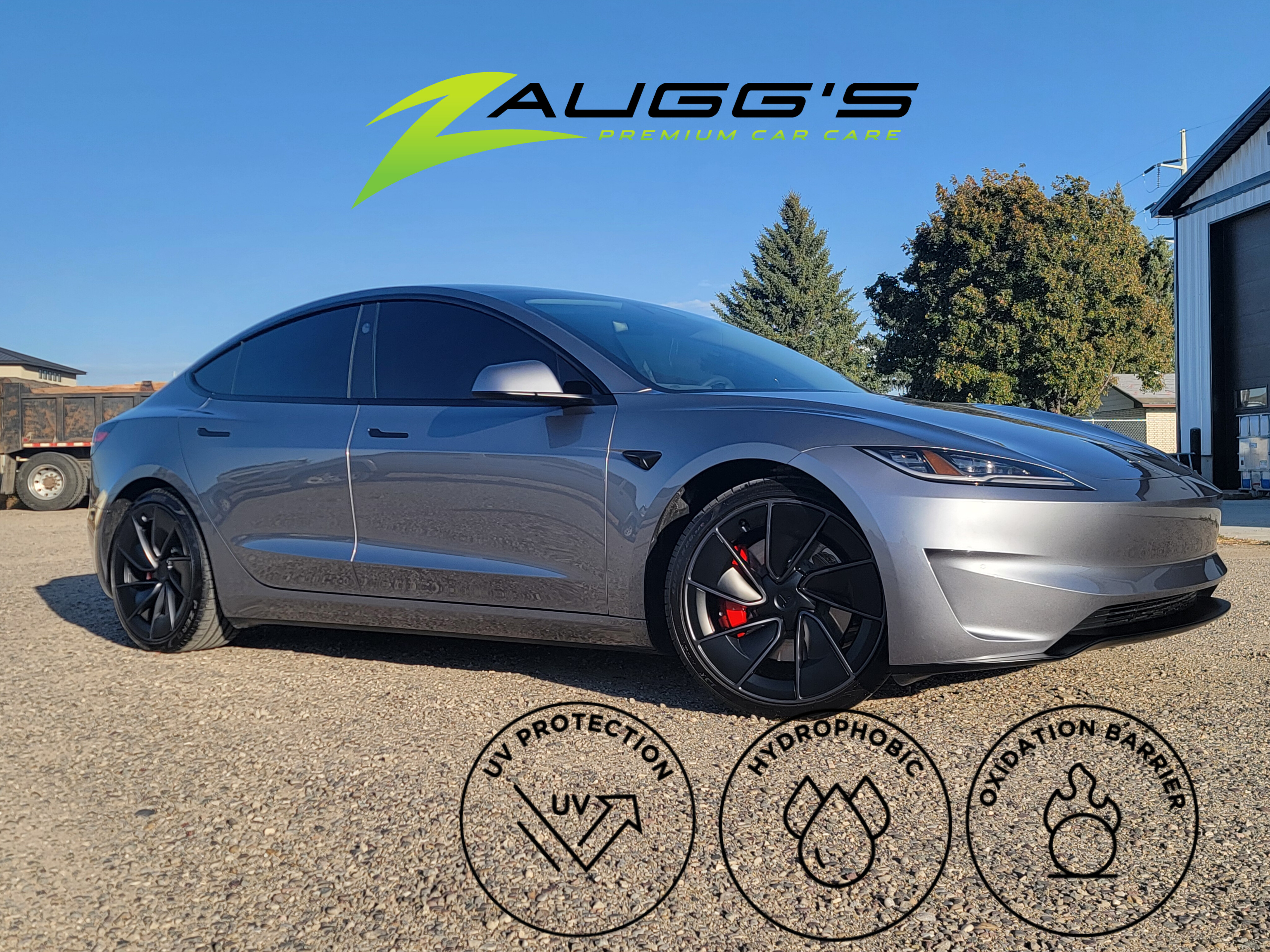
The Detail Shop Idaho Falls Tesla Owners Have Been Looking For
Most detail shops treat a Tesla like any other car. That's a problem. Between the factory paint formulation, the full glass roof, the flush door handles, and the sensor array built into nearly every panel, a Tesla requires a fundamentally different approach before a single product is applied. Idaho Falls owners who've had their vehicles worked on by a generalist shop often discover the hard way what corners were cut.
We've built our Tesla process around what actually matters for these vehicles — careful decontamination, product compatibility with EV components, and protection strategies that hold up in real Idaho driving conditions. That means no guesswork on camera coverage, no metallic films near Autopilot hardware, and no wax-based products on surfaces that need a proper foundation before any coating is applied.
Does Your Tesla's Paint Color Affect How Long It Lasts?
Color is one of the most debated topics among Tesla owners, and most of the conversation misses the point entirely. Yes, darker finishes like black and deep blue show surface marring more readily. Yes, lighter colors are more forgiving of minor contact marks. But the variable that actually determines how your Tesla's paint holds up over time isn't the pigment — it's the clear coat sitting on top of it, and Tesla's is thin across every color in the lineup.
Tesla's manufacturing process uses low-VOC water-based paints to meet environmental regulations. The result is a finish that looks sharp leaving the factory but lacks the build thickness of traditional solvent-applied automotive coatings. Idaho Falls conditions — intense high-altitude UV in the summer, road abrasive sand and salt through winter, and dry winds that carry fine particulates year-round — all accelerate degradation on a clear coat that was already starting from a thinner baseline.
Choosing a color based on which one hides damage best is the wrong frame entirely. Every Tesla color is equally worth protecting, and the good news is that the protection options available today are genuinely excellent. A properly applied ceramic coating creates a chemically bonded layer over the factory clear coat that resists UV breakdown, chemical etch, and light abrasion. Pair that with paint protection film on high-impact zones and your Tesla holds its finish regardless of color — and regardless of Idaho's road conditions.
The Case for Paint Protection Film on Your Idaho Falls Tesla
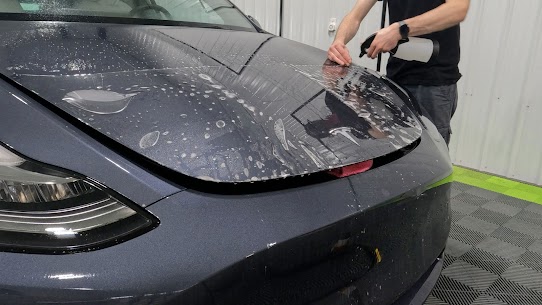
There's a design trade-off built into every Tesla that most owners don't think about until they're staring at chips on their hood. The absence of a traditional front grille creates that clean, uninterrupted nose Tesla is known for — but it also eliminates the deflection points that conventional vehicles use to redirect road debris away from painted surfaces. On Idaho Falls roads, where highway chip seal, loose gravel shoulders, and winter sand spread are part of daily driving, that smooth front end takes a beating that builds up faster than most owners expect.
Paint protection film addresses this directly. A precisely cut layer of PPF over the front bumper, hood, side mirrors, and front fenders intercepts road debris before it contacts the factory paint. The film itself is optically clear and doesn't alter the vehicle's appearance. When it does sustain surface-level scratching from road contact, the self-healing properties of quality PPF allow those marks to disappear with heat exposure — keeping the covered panels looking consistent and undamaged mile after mile.
For Idaho Falls Tesla owners, the long-term math on PPF is straightforward. A front-end chip repair is a cost you pay once, but unprotected paint accumulates damage continuously. Every highway run to Pocatello, every gravel county road, every winter morning on salted pavement adds up. PPF installed correctly at the front of your vehicle preserves original paint that would otherwise require touch-up or panel repainting — and original factory paint is always worth more at trade-in than a repainted panel, regardless of how well the repair was done.
Frequently Asked Questions
Frequently Asked Questions
Why is my Tesla paint so prone to swirl marks?
The manufacturing process Tesla uses prioritizes environmental compliance and production efficiency over paint film build. Water-based paints meet emissions standards but deposit a thinner, softer clear coat than conventional solvent-based systems. That softer surface is more vulnerable to the micro-abrasion that causes swirl marks — contact from drive-through car wash brushes, improper hand washing technique, even low-quality microfiber cloths dragged across a dirty surface. The flat, wide panel geometry on most Tesla models reflects light in a way that makes those swirls more visible than on vehicles with more complex bodywork. Addressing this starts with a proper paint correction to remove existing damage, followed by a ceramic coating to harden the surface against future marring.
What window tint should I get for my Tesla?
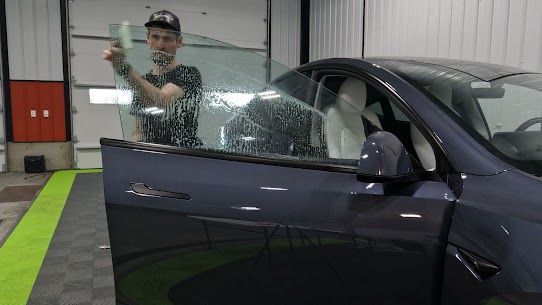
Ceramic tint is the right answer for a Tesla in Idaho Falls, and it goes beyond aesthetics. The panoramic glass roof on most Tesla models is one of the largest in any production vehicle, which means heat load and UV exposure inside the cabin are significantly higher than a conventional car with a standard sunroof. Ceramic film blocks a high percentage of infrared heat without relying on metallic compounds that interfere with Autopilot cameras, GPS reception, or the wireless systems built into the vehicle. The result is a cooler cabin that requires less climate control energy, which in an EV directly translates to better range consistency — particularly on hot Idaho Falls summer days when the battery is already managing thermal load. We install Kepler ceramic film, chosen specifically for its performance and its compatibility with Tesla's sensor hardware.
How much does ceramic coating a Tesla cost?
Pricing depends on the coating product selected, how long you want the protection to last, the condition of the paint at the time of installation, and the size of your Tesla model. Generally speaking, expect to invest somewhere between $400 and $3,000. A single-year entry coating on a well-maintained Model 3 sits closer to the lower end. A multi-year Ceramic Pro package on a larger Model X or Model Y — especially when paired with paint correction before installation — moves toward the higher end. The value equation in Idaho Falls is particularly favorable: ceramic coating dramatically reduces the maintenance burden of keeping a light-colored Tesla clean in dusty eastern Idaho conditions, extends the life of the factory paint, and eliminates the need for recurring wax or sealant applications. Contact us for a quote based on your specific vehicle.
Can you detail the outside of a Cybertruck?
It is, but almost nothing about the process looks like conventional automotive detailing. The Cybertruck's body panels are bare 30X cold-rolled stainless steel — no paint, no clear coat, no color. Standard polishing compounds, waxes, and even most ceramic coatings are formulated for painted surfaces and will either do nothing or cause visible damage when applied to stainless. Because the panels are flat and highly reflective, any directional scratching or inconsistent sheen from improper product use becomes immediately obvious. Proper Cybertruck detailing focuses on stainless-appropriate cleaning agents, decontamination methods that won't etch or discolor the metal, and stainless-compatible protective coatings that reduce fingerprinting, water spotting, and surface oxidation over time. If you're a Cybertruck owner in the Idaho Falls area, call us before taking it anywhere — it's a vehicle that requires a very specific approach.
Is the Tesla interior actually good quality?
Honest answer: it depends on what you're comparing it to and what you value. Tesla cabins are built around a technology-first philosophy — the software experience, display integration, and overall digital ecosystem are genuinely impressive. The physical materials, however, don't always match the vehicle's price point. Hard plastics, sparse trim, and the minimalist design language that defines Tesla interiors can feel underwhelming to buyers coming from traditional luxury brands that invest heavily in tactile material quality. Production consistency has also varied across model years, with some owners experiencing fit and finish issues that reinforced those impressions. None of that makes the interior bad — it makes it different. What it does mean practically is that the vegan leather, dashboard, and headliner in your Tesla respond extremely well to protective treatment. Surfaces that are thinner and less robust benefit more from protection applied early, which is something we factor into every interior service we do on a Tesla.
Rigby Idaho's Tesla Specialist
Your Tesla's Interior Faces More Than Just Everyday Wear in Idaho Falls
At nearly 4,700 feet of elevation, Idaho Falls receives UV radiation at an intensity that surprises most people who haven't thought about it. That altitude exposure, combined with Tesla's expansive panoramic glass roof, creates an interior UV environment that's harder on cabin materials than the average vehicle experiences in lower-elevation climates. Vegan leather that might hold up for a decade in Seattle or Portland can begin showing surface drying and color shift in Idaho Falls in a fraction of that time without UV protection applied directly to the seating and surfaces.
The winter side of Idaho Falls weather creates a different problem. Temperature swings between a cold overnight park and a heated interior put repeated stress on unprotected dashboard and trim plastics. Road salt tracked inside on boots and floor mats creates a corrosive environment that standard carpet and floor liner materials weren't designed to handle long-term. Interior protection at Zaugg's is built around what Idaho Falls specifically does to a Tesla cabin — not a general detailing menu applied the same way regardless of climate.

Eight Years of Southeast Idaho Road Knowledge Behind Every Tesla We Touch
Knowing how to detail a Tesla is one thing. Knowing how the stretch of US-20 between Idaho Falls and Rigby chips front bumpers, how Snake River Plain wind carries abrasive volcanic particulate across painted surfaces, and how hard freeze-thaw cycles in a high desert climate stress factory-applied paint — that's something that comes from years of working on vehicles in this specific region. Generic detailing advice isn't written for Idaho Falls. The protection recommendations we make for local Tesla owners are.
Idaho Falls sits at the center of a driving radius that puts Teslas through genuinely varied conditions. Daily commuters deal with city traffic, salted winter roads, and the kind of dusty dry summers that leave a fine abrasive layer on every horizontal surface. Vehicles making the run toward Jackson Hole add mountain elevation, road grit through Teton Canyon, and UV intensity that increases with every thousand feet of altitude gained. Tesla owners in the area need a shop that treats those conditions as real factors in the protection strategy — not an afterthought.
At Zaugg's, every Tesla starts the same way: a thorough paint inspection under quality lighting before anything else happens. That inspection identifies contamination, existing marring, chip damage, and surface oxidation — all of which affect what prep work is needed before a coating or film is installed. We don't skip this step, and we don't guess. Once the inspection is done, we build a service plan around your vehicle's actual condition and your driving habits. Idaho Falls pickup and dropoff is available, so the whole process fits around your schedule without requiring you to rearrange your day.
Clean - protect - maintain
At Zaugg's Premium Car Care, we're here to support the Idaho Falls community with professional auto detailing, ceramic coatings, window tinting, and long-term vehicle protection services that go well beyond appearances. Based in Southeast Idaho with over 8 years of hands-on experience, our focus is on honest recommendations, skilled workmanship, and educating every customer so they can protect their investment with confidence.
From mobile detailing and paint decontamination to Ceramic Pro coatings and premium window film, our goal is to serve every Idaho Falls customer with integrity, consistency, and care. A clean, protected vehicle improves daily life, resale value, and pride of ownership — and we're proud to earn that trust one vehicle at a time.
Family Owned and Operated
We are a local business that strives to meet deadlines and provide the best services available. We carefully select our staff and products/services to ensure you are satisfied.





OUR SERVICES
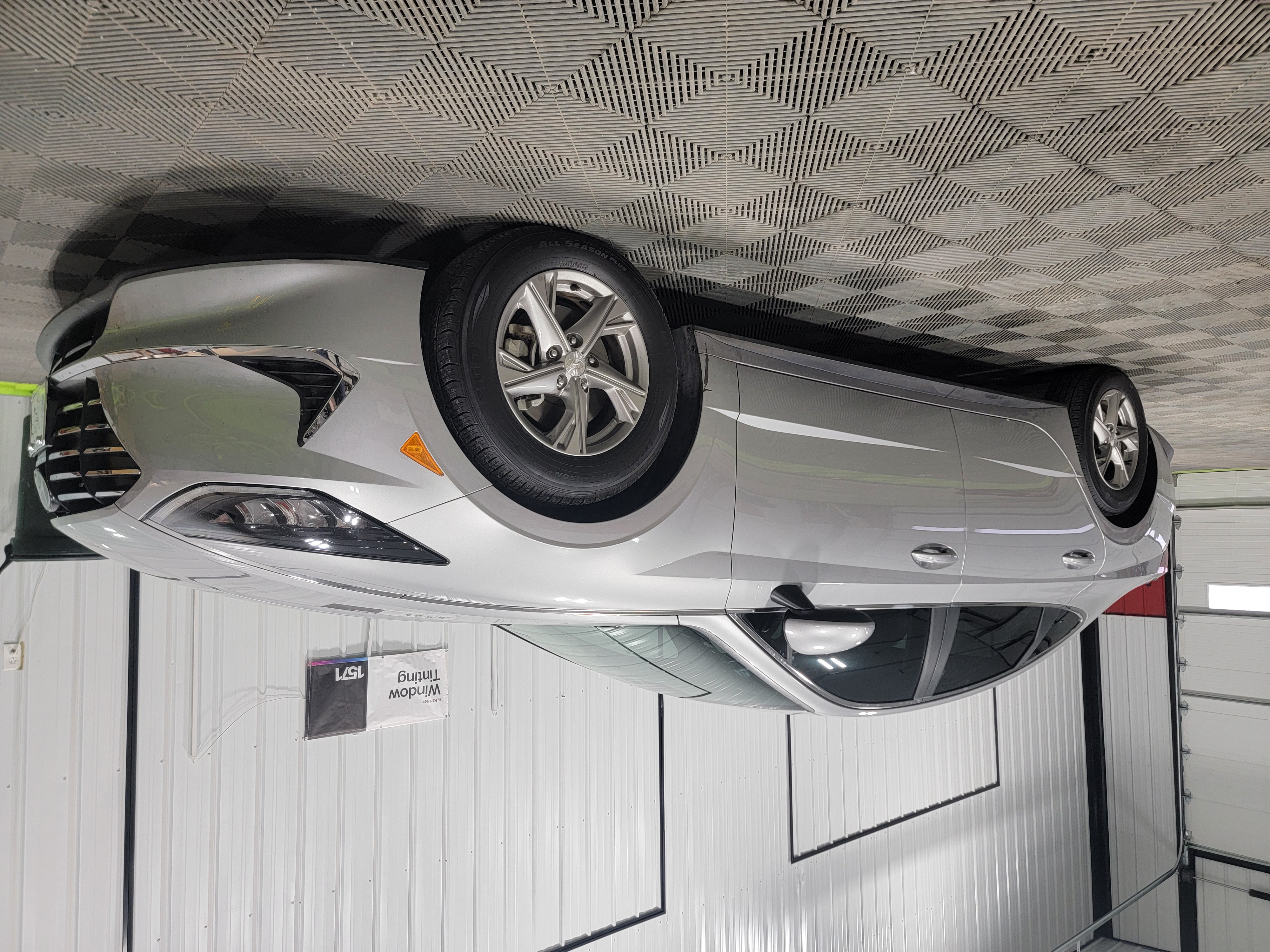
Auto Detailing
Auto Detailing
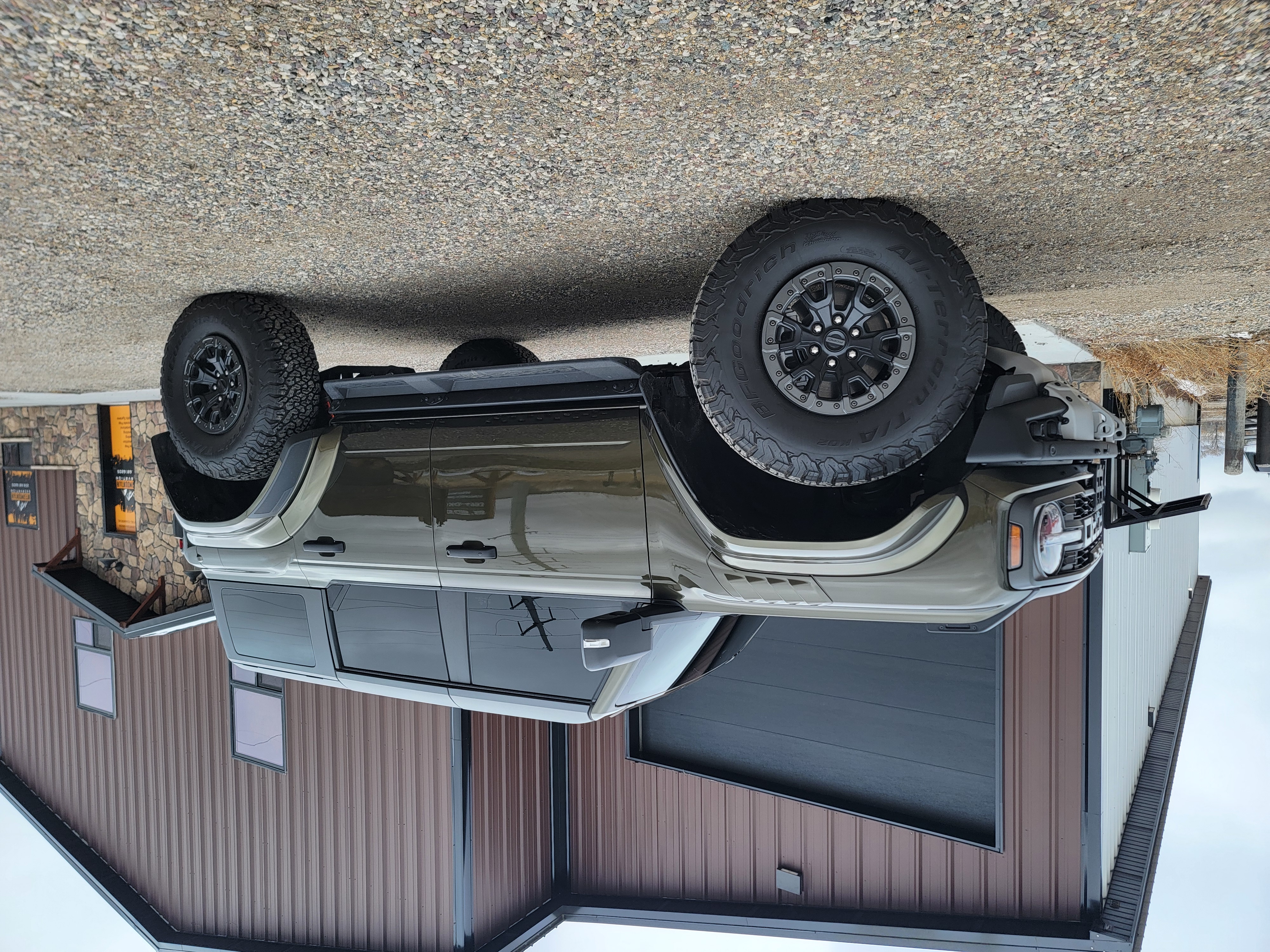
Ceramic Coatings
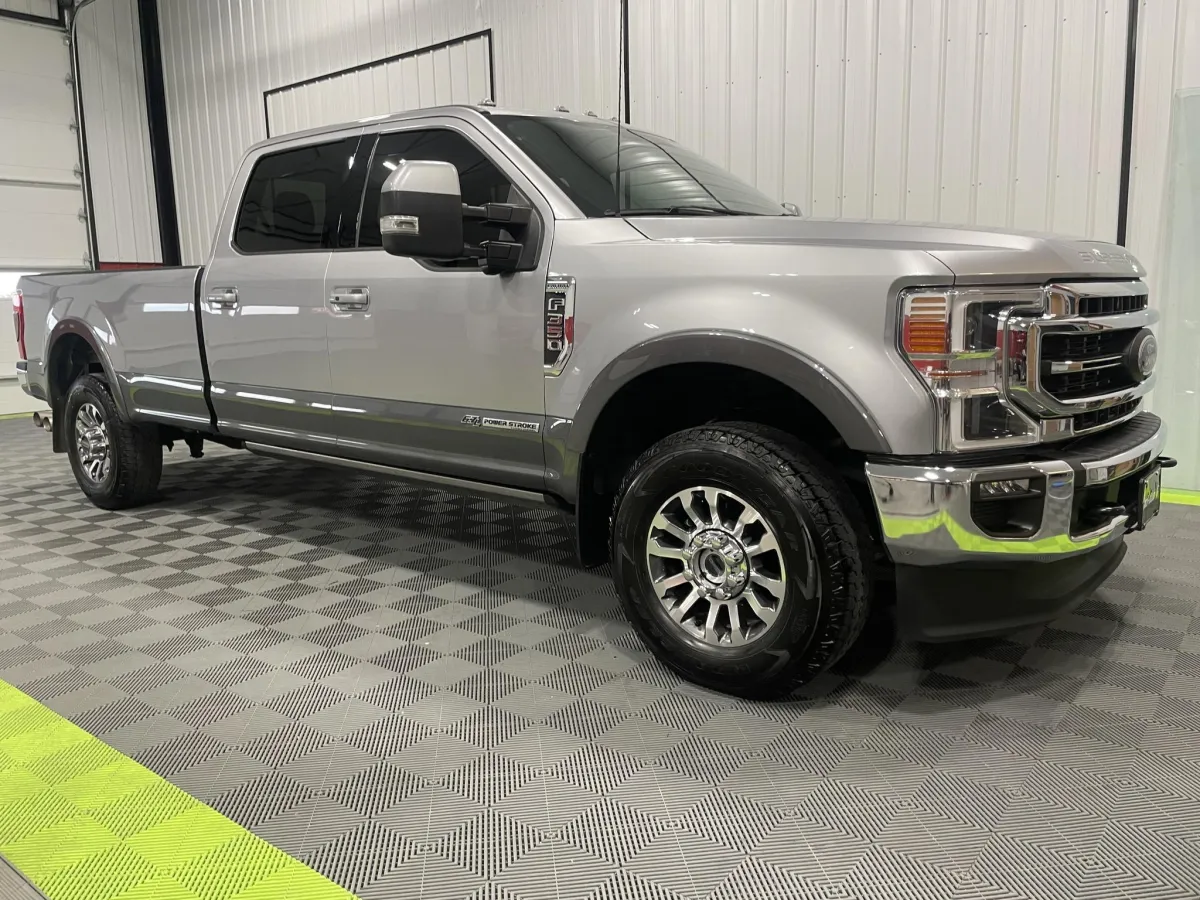
Window Tinting
Ceramic Coatings